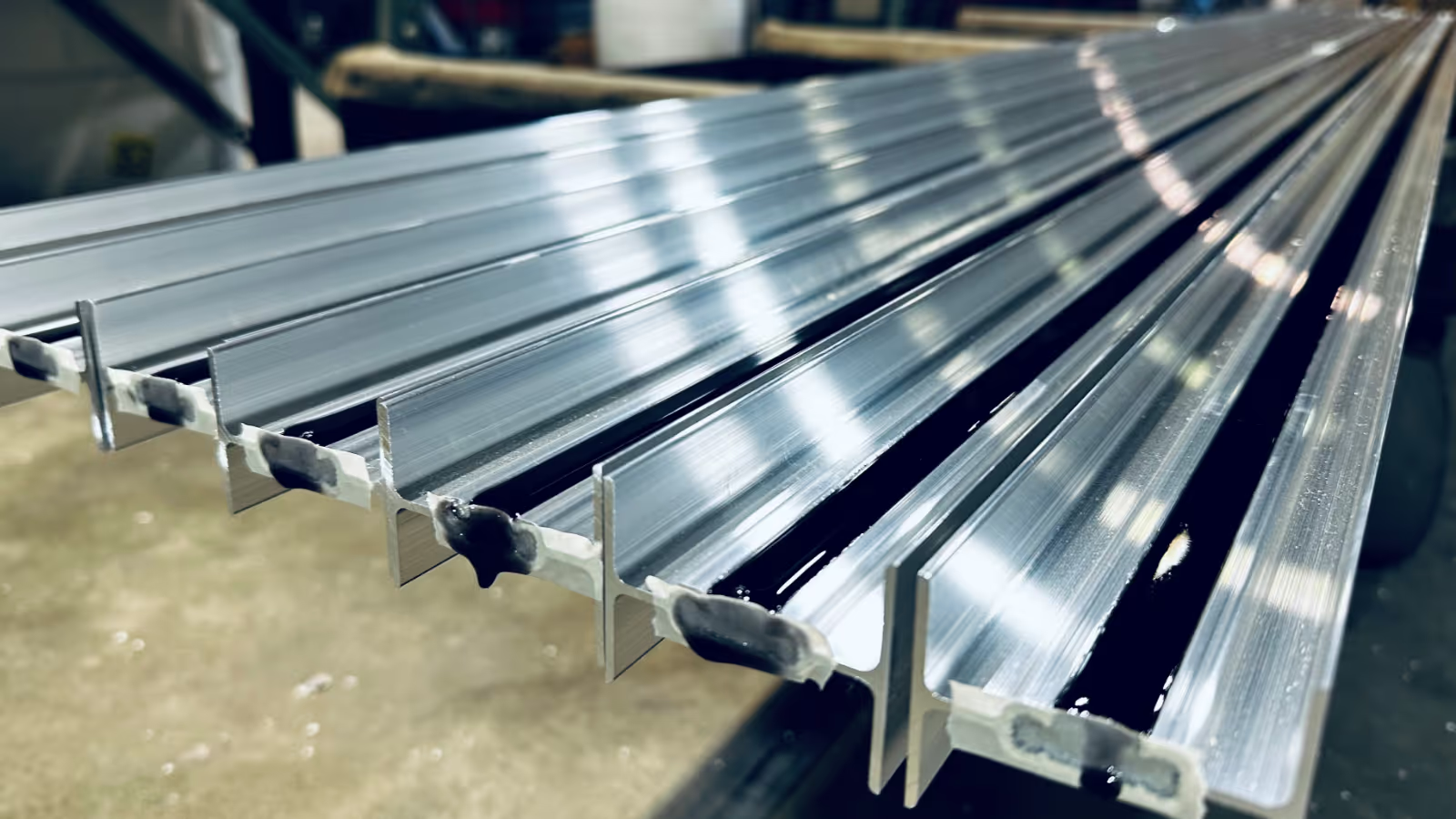
Thermal pour and debridge is a supplemental finishing process used to integrate improved thermal performance properties into aluminum extrusions used in windows, doors, and other exterior-facing applications. Finding a partner that specializes in thermal pour and debridge with supplemental fabrication capabilities, like Precision Steel Services, saves time, money, and effort.
The thermal pour and debridge process is a proven method used to fabricate a true thermal break in aluminum extrusions that prevents unwanted heat transfer. At its core, the process requires filling a unique cavity in the extrusion profile with an insulating polymer that, when cured, has the excess removed to create a channel that “interrupts” heat transfer without compromising the strength and dimension integrity of the extruded aluminum.
In the case of Precision Steel Services, the specific polymer used to create the thermal barrier system is Azon SU 315-14T, a proprietary product of Azon USA, of which Precision Steel is a licensed applicator.
Partnering with Precision Steel Services for thermal pour and debridging, amongst other finishing services, offers measurable financial and turnaround time advantages for customers who are used to splitting up work and juggling logistics between multiple vendors. As Precision Steel can complete all of these services within one facility, customers avoid additional freight expenses, staggered production schedules, minimum order quantities, and repeated handling costs that quickly add up and erase profit margins.
To further exemplify the potential cost and time savings offered by partnering with us versus sourcing multiple vendors, we’ve put together a hypothetical project that requires thermal pour and debridge, powder coating, and finish machining.
At these estimated rates, a project with 2,000 linear feet of extrusions, the total costs could look like the numbers below.
Conversely, by working with only Precision Steel to powder coat, thermal fill, debridge, and machine the aluminum extrusions, the cost savings are as follows.
With this rough example, customers could save nearly 10% on the production costs and reduce their lead times by over a week by working with a singular provider like Precision Steel Services, versus finding multiple vendors and juggling the logistics that come with it.
Thermal pour and debridge technology continues to play a critical role in modern aluminum extrusion design, particularly for window and door systems that require improved energy efficiency without sacrificing strength or dimensional control. By combining this specialty process with in-house fabrication capabilities, Precision Steel Services streamlines downstream operations and helps customers avoid the cost, complexity, and scheduling risk associated with multiple finishing vendors. Whether the need involves a low-volume architectural profile or a full production run of coated, machined extrusions, Precision Steel delivers a reliable single-source model that shortens timelines, improves part consistency, and drives real financial value for OEMs, contractors, and extruders.